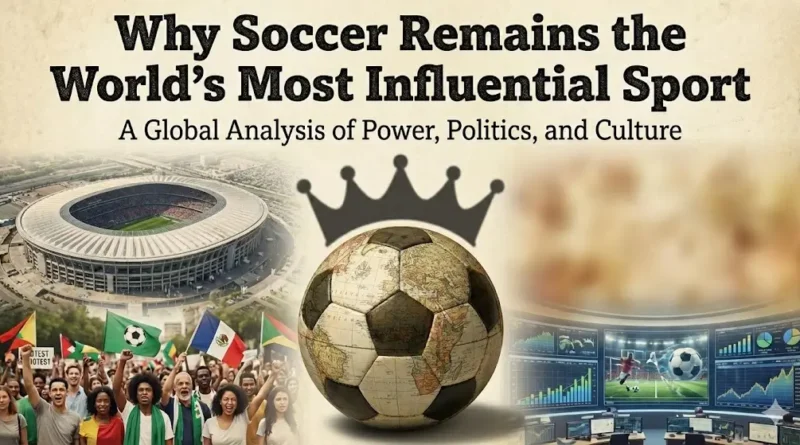
Why Soccer Remains the World’s Most Influential Sport
Why soccer remains the world’s most influential sport is rooted in its unmatched ability to shape culture, economics, identity, and global connection.
Soccer is not limited to stadiums or matchdays. It influences how people communicate, celebrate, compete, and even understand themselves. No other sport reaches as deeply or as widely into everyday life across the planet.
Universal Accessibility and Simplicity
Soccer’s global influence begins with its simplicity. The game requires minimal equipment, limited space, and basic rules that can be understood almost instantly. This accessibility allows soccer to thrive in cities, rural areas, schools, and informal settings.
Children can play soccer anywhere, from streets to beaches to open fields. This ease of access ensures early exposure and lifelong engagement. Because the game belongs to everyone, it becomes embedded in communities regardless of economic conditions.
A Shared Global Language
Soccer functions as a universal language. Fans from different countries, cultures, and backgrounds can connect through shared understanding of the game.
Matches create moments of collective emotion that transcend borders. A goal, a save, or a dramatic comeback carries the same meaning whether watched in North America, Europe, Africa, or Asia. This shared experience gives soccer a unique communicative power unmatched by other sports.
Cultural Identity and Belonging
For millions of people, soccer represents identity. Supporting a club or national team often connects families across generations.
Soccer clubs become symbols of cities, regions, and traditions. Wearing a team’s colors or attending matches strengthens feelings of belonging. This emotional connection makes soccer more than entertainment — it becomes part of personal and collective identity.
Economic Influence Across Continents
Soccer plays a major role in the global economy. Professional leagues generate revenue through broadcasting, sponsorships, merchandise, and tourism.
Major tournaments drive infrastructure investment and create employment opportunities. Beyond elite competition, local soccer ecosystems support coaches, trainers, vendors, and community organizations. Soccer’s economic footprint extends far beyond professional players and stadiums.
Social Impact and Community Development
Soccer is widely used as a tool for social progress. Community programs leverage the game to promote education, health awareness, inclusion, and cooperation.
Nonprofit initiatives use soccer to engage youth, encourage school attendance, and teach life skills. Because soccer is familiar and enjoyable, it becomes an effective platform for positive social change in diverse environments.
Media, Technology, and Global Reach
Modern technology has amplified soccer’s influence. Digital platforms allow fans to follow teams, players, and leagues in real time from anywhere in the world.
Social media turns soccer moments into global conversations within seconds. Streaming services expand access, while analytics deepen understanding of the game. Soccer’s adaptability to new media ensures its relevance in a rapidly changing digital landscape.
Influence on Youth and Education
Soccer plays a significant role in youth development. Participation teaches teamwork, discipline, leadership, and resilience.
Many educational institutions integrate soccer programs to support student engagement and personal growth. Scholarships and development pathways provide access to education for talented individuals. Soccer becomes a bridge between sport, learning, and opportunity.
Gender Progress and Inclusion
The growth of women’s soccer has expanded the sport’s global influence. Increased visibility, investment, and participation challenge long-standing barriers.
Women’s soccer inspires new generations and promotes equality. Its rise demonstrates soccer’s ability to evolve socially while maintaining core values. Inclusion strengthens the sport’s global relevance and cultural impact.
Global Movement of Talent
Soccer’s influence is reinforced by the movement of players and coaches across borders. Talent migration connects leagues, styles, and cultures.
Players become ambassadors for different regions, bringing global attention to clubs and communities. This exchange enriches the game and deepens international connection, reinforcing soccer’s global identity.
Soccer and Emotional Power
Few sports generate emotional intensity equal to soccer. Victories and defeats carry deep meaning, often tied to pride and belonging.
This emotional depth strengthens loyalty and engagement. Fans invest emotionally because soccer reflects shared hopes and struggles. This connection fuels the sport’s lasting influence.
Political and Diplomatic Presence
Soccer occasionally serves as a diplomatic bridge. Friendly matches and international tournaments create opportunities for dialogue and unity.
While not a solution to political challenges, soccer provides neutral ground where cooperation and respect can emerge. Its visibility and reach give it unique soft power on the global stage.
Adaptability Across Generations
Soccer evolves while preserving tradition. Rule updates, tactical changes, and technological integration modernize the game without erasing its essence.
This balance allows soccer to appeal to both older and younger generations. Fans recognize familiar elements while embracing innovation, ensuring continuity and growth.
Why No Other Sport Compares
Other sports may excel regionally, but soccer’s global footprint remains unmatched. Its accessibility, emotional resonance, and cultural integration create influence beyond competition.
Soccer shapes music, fashion, language, and social behavior. It influences how people gather, communicate, and celebrate. No other sport holds such comprehensive global presence.
The Future of Soccer’s Influence
As globalization and technology advance, soccer’s influence will continue to expand. Digital engagement, youth participation, and international collaboration will shape the next era.
Organizations increasingly recognize soccer’s responsibility as a global institution. Efforts toward sustainability, inclusion, and education ensure that soccer remains a force for good.
Conclusion
Why soccer remains the world’s most influential sport lies in its ability to connect people across boundaries of culture, language, and geography. Through accessibility, emotion, economic impact, and social power, soccer extends far beyond the pitch. It is not just a sport — it is a global phenomenon that continues to shape the world in meaningful and lasting ways.