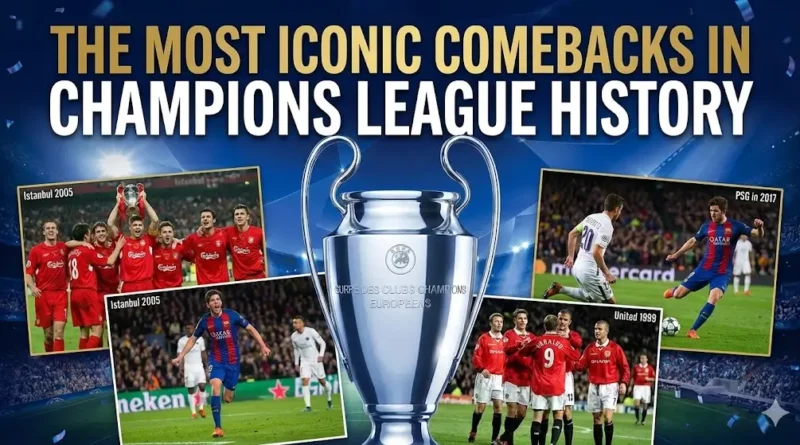
The Most Iconic Comebacks in Champions League History
The most iconic comebacks in Champions League history are remembered not simply for the final scores, but for how they transformed despair into belief. These matches stand as proof that football is never decided until the last whistle.
Across decades, European nights have produced reversals so dramatic that they reshaped how teams approach elimination matches and how fans understand the limits of possibility.
Why Comebacks Define the Champions League
The Champions League offers a unique environment where pressure, quality, and emotion reach their peak. Teams face opponents of similar strength, often with entire seasons riding on two legs or a single final. In this setting, a comeback is more than a tactical achievement — it becomes a psychological battle.
Unlike domestic leagues, there is little room for recovery after failure. This intensity creates scenarios where teams push beyond conventional limits, making dramatic turnarounds one of the competition’s defining features.
When Atmosphere Changes the Game
Many historic reversals were fueled by stadium energy. The influence of a home crowd can elevate performance levels, disrupt opponents, and alter momentum in ways that statistics cannot fully explain.
Players often describe these matches as feeling different from any other. The noise, anticipation, and belief create an emotional surge that encourages relentless attacking and fearless decision-making. Once the first goal arrives, pressure shifts rapidly, forcing the opposing team into mistakes that accelerate the collapse.
Tactical Risk and Bold Decisions
Comebacks rarely happen without calculated risk. Coaches facing elimination often abandon conservative structures in favor of aggressive setups. High defensive lines, attacking substitutions, and positional freedom become necessary tools rather than dangerous gambles.
Some of the most famous reversals began with early goals that justified these risks. Others involved late tactical switches that caught opponents unprepared. These moments reinforced the idea that flexibility and courage are essential qualities for success in European competition.
Over time, such matches influenced how managers prepare for second legs, making caution with large leads a central lesson of Champions League football.
Individual Brilliance Under Pressure
While collective effort is essential, many iconic comebacks are remembered for individual performances that changed the course of a match. A single player’s confidence can lift an entire team, turning frustration into momentum.
These performances are often marked by leadership rather than just skill. Whether through decisive goals, relentless pressing, or vocal encouragement, standout players have repeatedly acted as emotional anchors during difficult moments. Their impact goes beyond statistics, embedding them permanently in the tournament’s history.
Psychological Collapse and Momentum Swings
Comebacks are not only about the team that rises but also about the one that falters. Psychological pressure plays a critical role in sudden reversals. When a leading team concedes unexpectedly, doubt can spread quickly.
Defensive errors, poor communication, and rushed decisions often follow. The inability to slow the game or regain control allows momentum to build on the opposing side. Champions League history shows that managing emotions is just as important as defending space.
These collapses became case studies for sports psychologists and coaching staffs, highlighting the importance of composure in high-stakes football.
How Comebacks Changed Strategic Thinking
The legacy of iconic reversals extends beyond highlight reels. Clubs learned that protecting a lead requires proactive control rather than passive defense. Sitting back invites pressure, while maintaining attacking intent can prevent opponents from gaining confidence.
This realization influenced how teams approach both legs of knockout ties. Away goals, substitutions, and game management became more deliberate, with coaches emphasizing balance instead of fear. As a result, modern Champions League matches often feature tactical chess battles shaped by lessons from past collapses.
The Role of Belief and Identity
Some clubs developed reputations for resilience after repeated dramatic turnarounds. These identities created belief before matches even began, affecting how opponents prepared mentally.
Players entering such environments often felt the weight of history, aware that previous teams had achieved the impossible. This psychological edge became part of a club’s culture, passed down through generations of squads and supporters.
Belief, once established, proved to be a powerful competitive advantage in Europe.
Global Impact on Football Culture
Iconic Champions League comebacks reached far beyond Europe. Broadcast worldwide, they introduced fans across continents to the emotional depth of the competition. Social media amplified these moments, turning them into shared global experiences.
Young players grew up watching these matches, drawing inspiration from the courage and intensity displayed. Coaches referenced them in team talks, while commentators used them as benchmarks for drama in football.
The tournament’s reputation for unpredictability strengthened its global appeal, reinforcing why it remains the most watched club competition in the world.
Why These Moments Still Matter
Even in an era dominated by data analysis and tactical planning, Champions League comebacks remind us that football remains unpredictable. No model can fully account for belief, emotion, and momentum.
These matches continue to influence how teams approach adversity. Players know that surrendering is never acceptable, while leaders understand the importance of mental strength. Each new season carries the possibility of another historic reversal, keeping the competition alive with tension and hope.
Conclusion
The most iconic comebacks in Champions League history represent the soul of the competition. They showcase courage under pressure, tactical bravery, and the power of belief. Long after trophies are lifted, these nights endure as reminders that football’s greatest moments often emerge when the odds seem impossible.