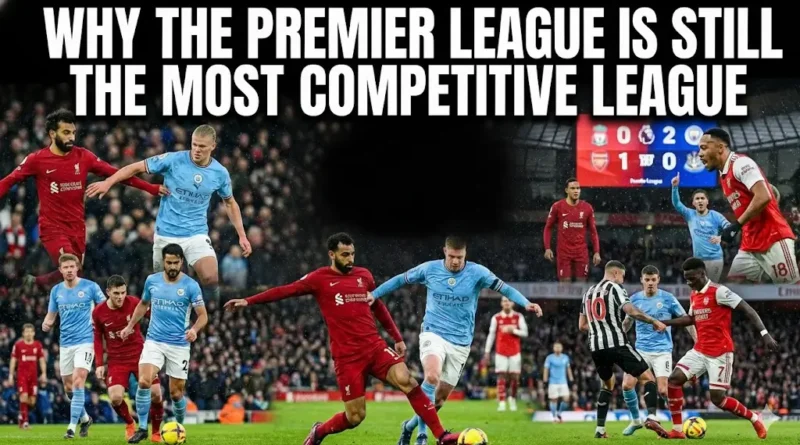
Why the Premier League Is Still the Most Competitive League
Why the Premier League is still the most competitive league in global soccer can be explained by a rare combination of financial balance, tactical diversity, cultural intensity, and structural depth.
While many top leagues are defined by a small group of dominant clubs, the Premier League consistently produces unpredictable results, dramatic title races, and intense battles across the entire table.
Financial Distribution Creates Balance
One of the main reasons the Premier League remains so competitive is its revenue distribution model. Broadcasting income is shared more evenly compared to other major leagues, allowing mid-table and lower-ranked clubs to invest meaningfully in players, facilities, and staff.
This financial structure reduces the gap between elite teams and the rest of the league. Even newly promoted clubs often arrive with resources strong enough to challenge established sides. As a result, every match carries risk, and no fixture can be considered routine.
Depth of Squad Quality
Premier League teams typically maintain deep and balanced squads. This depth is essential in a league known for its physical demands and crowded schedules.
Injuries or suspensions rarely end a season outright because teams can rotate without losing competitiveness. This depth also increases internal competition, pushing players to maintain high performance levels. The result is a league where intensity remains high from August to May.
Tactical Diversity Across Clubs
Unlike leagues dominated by a single tactical philosophy, the Premier League features a wide range of playing styles. Some teams prioritize high pressing and vertical attacks, while others focus on structured defense and controlled transitions.
This diversity creates weekly tactical challenges. Coaches must prepare for constant variation, adjusting plans based on opponent strengths rather than relying on a single identity. This adaptability requirement raises the overall competitive standard.
Physical Intensity and Match Tempo
Premier League soccer is widely known for its pace and physicality. Matches are played at high tempo, with frequent transitions and sustained pressure.
This intensity limits predictability. Teams that dominate possession still face danger during quick counterattacks, while defensively focused teams must withstand relentless pressure. Physical readiness becomes as important as technical quality, making consistency difficult across a long season.
Competitive Mid-Table and Relegation Battles
Competition in the Premier League extends far beyond the title race. Mid-table teams compete aggressively for European qualification, while relegation battles often involve multiple clubs until the final weeks.
These stakes ensure high motivation across the standings. Matches between mid-table teams are rarely passive, as financial rewards and future planning depend heavily on final positions. This widespread urgency contributes to the league’s reputation for competitiveness.
Global Talent Pool
The Premier League attracts players and coaches from every major soccer region. This global recruitment brings varied skill sets, experiences, and tactical perspectives.
The presence of international talent raises the league’s overall quality while increasing competition for starting roles. Players must perform consistently to maintain their positions, as replacements of similar quality are always available.
Managerial Quality and Pressure
Premier League managers operate under intense scrutiny. Expectations from ownership, supporters, and media create constant pressure to deliver results.
This environment produces sharp decision-making and rapid adaptation. Coaches are forced to innovate, manage squads carefully, and respond quickly to setbacks. While pressure can lead to instability, it also drives competitive urgency and ambition.
Home and Away Challenges
Home-field advantage exists in the Premier League, but it is far from decisive. Away teams regularly earn results due to strong preparation and tactical discipline.
Crowd intensity varies widely across stadiums, creating unique challenges each week. Traveling teams must adapt to different atmospheres, field conditions, and tactical approaches, increasing the difficulty of maintaining consistency.
Youth Integration and Squad Renewal
Premier League clubs increasingly integrate young players into first teams. Investment in academies and development pathways has improved significantly.
Young players bring energy, adaptability, and hunger, refreshing squads and increasing internal competition. This constant renewal prevents stagnation and keeps teams evolving season after season.
Officiating and Match Management
Premier League officiating emphasizes game flow and physical tolerance. While decisions remain debated, this approach encourages continuous play and competitive duels.
Players must adapt quickly, as matches rarely slow down. This environment rewards mental resilience and discipline, further separating consistent teams from inconsistent ones.
European Commitments Add Complexity
Many Premier League clubs compete simultaneously in domestic and European competitions. Managing these dual demands adds complexity to squad planning and match preparation.
Teams balancing multiple tournaments face fatigue and rotation challenges. Those that handle these pressures effectively gain advantage, while others struggle to maintain form. This added layer increases unpredictability within the league.
Fan Culture and Expectation
Supporters play a critical role in shaping competitiveness. Premier League fan culture is demanding, vocal, and deeply invested.
Players and managers feel constant accountability. Poor performances rarely go unnoticed, reinforcing urgency and focus. This emotional environment contributes to the league’s intensity and entertainment value.
Margins Decide Outcomes
In the Premier League, small details often decide matches. A single mistake, set piece, or tactical adjustment can change results.
Because talent levels are closely matched, consistency becomes the ultimate challenge. Teams that manage details better than others rise, while minor lapses can derail campaigns.
Conclusion
Why the Premier League is still the most competitive league in global soccer lies in its balance, depth, intensity, and diversity. Financial structure, tactical variation, global talent, and cultural pressure combine to create a league where outcomes are rarely predictable. Every match matters, every point is contested, and success demands excellence across an entire season.