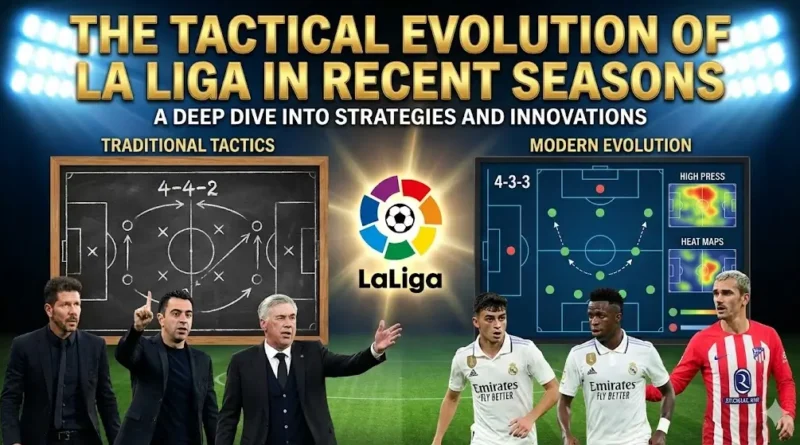
The Tactical Evolution of La Liga in Recent Seasons
The tactical evolution of La Liga in recent seasons reflects how Spanish soccer has adapted to a faster, more physical, and more analytical era. Once defined almost exclusively by slow build-up and extended possession, the league now showcases a wider range of approaches.
Clubs blend tradition with innovation, creating a competition that is tactically diverse and increasingly unpredictable.
From Possession Dominance to Tactical Variety
For many years, La Liga was associated with patient ball circulation and positional play. While these principles remain important, recent seasons have introduced greater variety. Teams now adjust their styles based on opponents, game state, and squad strengths.
Some clubs still prioritize long spells of possession, but others embrace direct transitions, quick vertical passes, and aggressive counterattacks. This shift reflects a broader understanding that modern soccer rewards adaptability rather than rigid identity.
The Influence of Pressing Systems
One of the most noticeable changes in La Liga has been the rise of structured pressing. Teams no longer wait passively in deep blocks. Instead, many apply coordinated pressure high up the field to disrupt build-up play.
Pressing in La Liga is often situational. Players are trained to recognize triggers such as poor touches or backward passes. This intelligent approach allows teams to win possession without exposing defensive lines. As a result, matches have become more intense and dynamic, with fewer predictable phases.
Defensive Organization and Compact Shapes
Defensive strategy in La Liga has evolved significantly. Rather than relying solely on individual defending, teams emphasize collective structure and spatial control.
Back lines maintain compact distances, while midfielders drop into defensive zones to reduce space between units. This organization limits passing lanes and forces opponents into less dangerous areas. In modern Spanish soccer, defensive discipline is viewed as a foundation for creativity rather than a restriction on attacking play.
Midfield Roles and Positional Flexibility
The role of the midfielder has expanded in recent seasons. La Liga players in central areas are now expected to contribute defensively, dictate tempo, and support attacks.
Many teams employ hybrid midfielders who can shift between holding and advanced roles depending on match situations. This flexibility helps maintain numerical balance and prevents opponents from exploiting space. Such adaptability reflects the league’s growing emphasis on tactical intelligence.
The Changing Use of Fullbacks
Fullbacks in La Liga are no longer confined to traditional defensive duties. Modern systems frequently ask them to invert into midfield or push high to create width.
This evolution provides additional passing options and helps overload central areas. By involving fullbacks in build-up play, teams increase control while maintaining attacking threats. This tactical trend mirrors developments across global soccer but has been uniquely refined within La Liga’s technical framework.
Emphasis on Transition Play
Transitions between defense and attack have become critical in La Liga’s tactical landscape. Teams now prepare extensively for moments immediately after losing or winning possession.
Quick recovery runs and counter-pressing are prioritized to prevent opponents from exploiting space. Conversely, when possession is regained, players are trained to recognize opportunities to attack before defenses reorganize. This focus on transition efficiency has increased match tempo and unpredictability.
Data and Technology in Tactical Planning
The integration of data analysis has influenced how La Liga teams prepare for matches. Coaches use performance metrics to identify patterns, weaknesses, and tendencies in both their own squads and opponents.
Video analysis and tracking data inform tactical decisions, from pressing height to set-piece organization. This analytical approach supports decision-making without replacing intuition, creating a balance between preparation and on-field creativity.
The Impact of International Influence
La Liga’s tactical evolution has also been shaped by international coaching influences. Managers from different soccer cultures have introduced new ideas, blending them with Spanish principles.
These influences have encouraged experimentation with formations, pressing structures, and attacking movements. The result is a league that respects its roots while remaining open to global tactical trends.
Youth Development and Tactical Awareness
Young players entering La Liga today are more tactically educated than ever before. Academies emphasize understanding multiple systems, preparing players to adapt quickly.
This education ensures continuity as tactical trends evolve. Young professionals arrive in first teams ready to interpret complex instructions, supporting the league’s overall tactical sophistication.
Competitive Balance and Strategic Planning
As La Liga becomes more tactically complex, the gap between teams has narrowed. Smaller clubs can compete effectively by organizing well and exploiting strategic details.
This competitive balance enhances the league’s appeal. Matches are less predictable, and tactical preparation often outweighs financial advantage. Spanish soccer increasingly rewards planning, discipline, and execution.
Conclusion
The tactical evolution of La Liga in recent seasons highlights a league in constant adaptation. By blending technical tradition with modern principles such as pressing, flexibility, and data-driven preparation, La Liga remains a reference point in global soccer. This evolution ensures the league continues to challenge players, coaches, and fans alike while shaping the future of the sport.