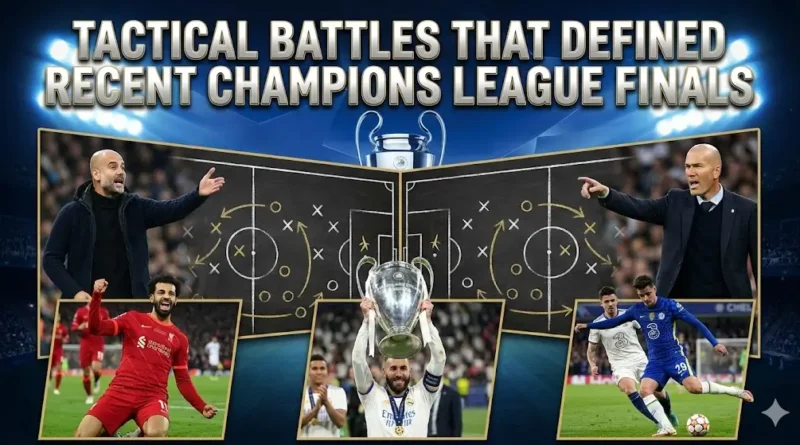
Tactical Battles That Defined Recent Champions League Finals
Tactical battles that defined recent Champions League finals reveal how modern football is increasingly decided on the sidelines as much as on the pitch.
While individual brilliance still matters, the most recent finals have been shaped by structure, planning, and the ability to adjust under extreme pressure. These matches highlight how coaching decisions influence outcomes at the highest level.
Finals as a Tactical Showcase
A Champions League final presents a unique tactical challenge. There is no second leg, no margin for recovery, and every choice carries immediate consequences. Coaches must prepare teams to handle elite opposition while anticipating in-game adjustments that could alter momentum.
Recent finals have shown a trend toward compact defensive shapes combined with rapid transitions. Rather than open, end-to-end contests, many decisive matches have been controlled chess matches, where space is restricted and patience becomes essential.
Compact Defenses and Controlled Risk
One defining feature of recent finals is the emphasis on defensive organization. Teams often prioritize shape and spacing over constant attacking. This approach limits opportunities for opponents and forces mistakes through pressure rather than reckless pressing.
Defensive blocks are carefully designed to deny central areas, pushing attacks wide and reducing the danger of through balls. Fullbacks frequently stay disciplined, while midfield lines shift laterally in unison. This collective movement reflects extensive preparation and trust in the game plan.
Midfield Control as the Key Battlefield
The midfield has emerged as the primary zone where finals are won or lost. Coaches focus heavily on numerical balance and positional discipline in this area, knowing that control of the center dictates tempo.
Recent finals often feature midfielders tasked with dual responsibilities: protecting the defense while initiating attacks. These players must read the game continuously, adjusting their positioning based on the opponent’s movements. Their ability to win second balls and recycle possession determines which team can impose its rhythm.
Pressing Triggers and Selective Aggression
Modern Champions League finals rarely involve constant high pressing. Instead, teams employ selective aggression, choosing specific moments to apply pressure. These triggers might include a poor first touch, a backward pass, or a defender receiving the ball under pressure.
This controlled pressing conserves energy while maximizing efficiency. When executed correctly, it leads to turnovers in dangerous areas without exposing defensive lines. Recent finals have shown how a single successful press can lead directly to a decisive goal.
The Role of Wide Areas
Wide play has become increasingly important in recent Champions League finals. With central spaces congested, teams look to create advantages on the flanks through overloads and movement.
Wingers are often instructed to drift inside, allowing fullbacks to advance and provide width. This rotation creates uncertainty for defenders, forcing difficult choices. Tactical success in wide areas frequently leads to cutbacks and low-risk scoring chances, reflecting a shift away from speculative crossing.
In-Game Adjustments and Flexibility
What separates elite coaches in finals is the ability to adapt during the match. Recent Champions League finals have been defined by timely substitutions and subtle tactical tweaks rather than dramatic overhauls.
Changes such as shifting a midfielder deeper, altering pressing intensity, or adjusting defensive marking can neutralize emerging threats. These decisions require calm analysis under pressure, as a single adjustment can change the direction of the match.
Managing Transitions
Transitions between defense and attack are moments of maximum vulnerability. Recent finals demonstrate how teams carefully manage these phases to avoid exposure.
When possession is lost, immediate compactness is prioritized over aggressive recovery. Conversely, when the ball is won, attacks are often measured rather than rushed. This disciplined approach reduces counterattacking risk and maintains structural balance throughout the match.
Game Management and Time Control
Tactical battles extend beyond formations and pressing. Game management, including tempo control and situational awareness, plays a critical role in finals.
Teams that lead often slow the game intelligently, using possession and fouls in safe areas to disrupt rhythm. Substitutions are timed not only for performance but also to break momentum. These subtle tactics reflect an advanced understanding of match psychology.
Data, Analysis, and Preparation
Recent Champions League finals are the product of extensive analytical preparation. Coaches rely on data to identify opponent tendencies, pressing weaknesses, and transition patterns.
This information informs training sessions, set-piece routines, and individual assignments. While players execute the plan, the foundation is built through detailed analysis that leaves little to chance.
Why These Tactical Battles Matter
The tactical complexity of recent finals reflects the broader evolution of football. Margins are smaller, athletic levels are similar, and success increasingly depends on preparation and adaptability.
These matches influence coaching trends across Europe, as ideas tested on the biggest stage filter down into domestic leagues. What works in a Champions League final often becomes a reference point for tactical development worldwide.
Conclusion
Tactical battles that defined recent Champions League finals demonstrate that modern football success is built on intelligence, discipline, and flexibility. While goals capture headlines, the strategic decisions behind them shape outcomes. As the game continues to evolve, these finals serve as a blueprint for how elite football is played when everything is at stake.